Development of 3D Intraoral Scanner Training in Dentistry
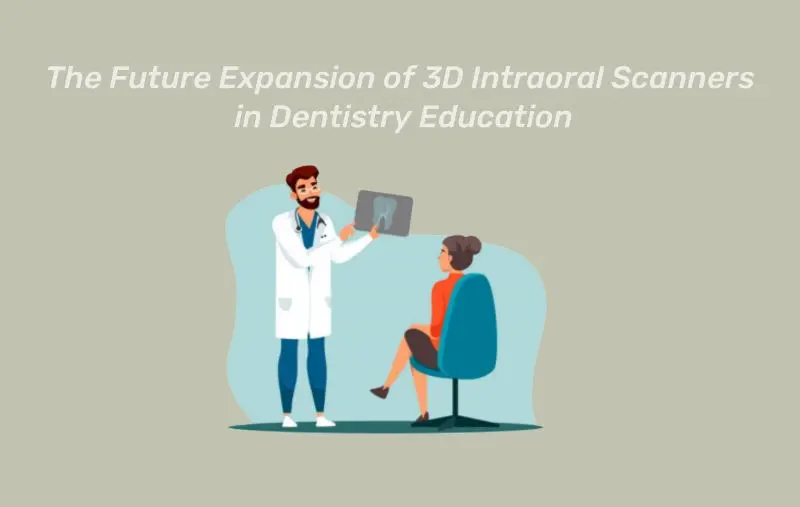
Dentistry is a progressive, constantly evolving healthcare profession with a very promising future. It is expected that 3D intraoral scanners will be increasingly used in the field of dental education in the foreseeable future. This innovative approach not only improves learning outcomes, but also prepares future dentists for the education of dentistry. It also prepares us for the digital age.
Traditionally, dental education has relied largely on traditional teaching methods, including lectures, textbooks, and hands-on exercises with physical models. While these methods remain valuable, they often fall short of providing students with real-world practical experiences that reflect the complexity of modern dental practice. Here it is 3D intraoral scanning technology comes into play to bridge the gap between theory and practice.
First of all, the introduction of 3D intraoral scanning technology is revolutionizing the way students learn about dental anatomy, occlusion and pathology. Thanks to these scanners, students can digitally capture highly accurate and detailed representations of the oral cavity in minutes.
Additionally, 3D intraoral scanning technology facilitates interactive learning experiences by allowing students to manipulate digital models in real time. They can zoom in on specific areas of interest, rotate the models for better visualization, and even simulate various treatment scenarios. This interactivity not only empowers students to perform more effectively. Not only does it keep them engaged, but it also deepens their understanding of complex dental concepts.
Additionally, integrating 3D intraoral scanning technology into the dental education curriculum enables the development of fundamental skills that are crucial for success in digital dentistry. Students learn how to operate these scanners, gain proficiency in digital impression-taking techniques, and get hands-on with CAD/CAM software for virtual treatment planning. gains experience.
Beyond technical skills, the integration of 3D intraoral scanning technology enhances critical thinking and problem-solving abilities among dental students. They learn to analyze digital scans, identify abnormalities, and develop comprehensive treatment plans based on digital data. This analytical approach not only increases diagnostic accuracy, but also It instills confidence in students in the transition from classroom to clinical practice.
Today, many graduates in dental disciplines widely use Launca intraoral scanners to provide superior dental treatments to their patients and gain practical experience.
In conclusion, the integration of 3D intraoral scanning technology into the dental education curriculum represents a significant step forward in preparing future dentists for the challenges and opportunities of digital dentistry.